Electrical & Pneumatic Infrastructure for a New High‑Tech Machine
OUR CUSTOMER
THE CHALLENGE
Fitting a full infrastructure into a highly compact machine
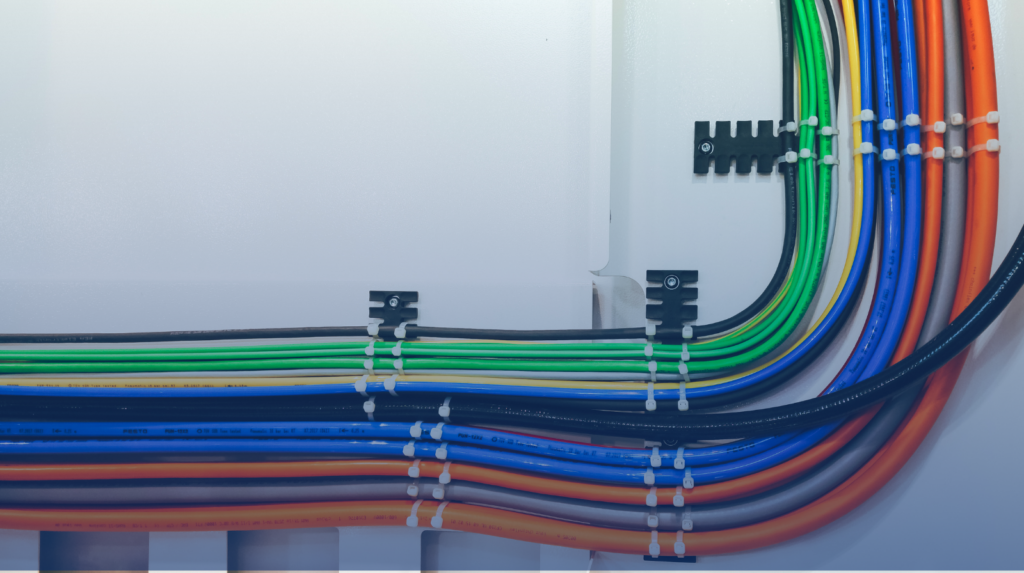
The machine offered extremely limited internal space, requiring precise routing of cables, pneumatic lines, and cable chains within the mechanical constraints.
Meeting EMC and UL certification requirements
The infrastructure had to comply with strict EMC shielding guidelines and UL standards for US market access.
Designing with predefined components and engineering standards
All electrical and pneumatic components — and the Eplan workflow — were imposed by the client, leaving no room for deviation.
Delivering structured work packages without rework
Clear interfaces were essential to ensure each work package integrated seamlessly into the larger system.
Building excellence together
This collaborative approach enabled high‑quality deliverables with minimal rework and created a strong foundation for future joint development.
The impact we made
Our experts delivered the Technical Projeduct Documentation of the integrated & scalable infrastructure design that seamlessly aligned with Nobleo’s machine architecture:
- Precise routing within extremely limited space
- Optimized EMC‑safe cable solutions & UL compliant infrastructure
- Complete Eplan documentation ready for production and service
- A scalable foundation for future machine variants
Facing Similar challenges?
PDM supports high‑tech OEMs in engineering modular, scalable, and service‑friendly system designs.
OUR APPROACH in action
- Shared ownership from day one:
We began by aligning on responsibilities, interfaces and the way Eplan is used, creating a shared engineering baseline everyone could rely on.
- Co‑engineering in a tight mechanical envelope:
Because the available space inside the machine was extremely limited, our engineers worked closely with Nobleo’s mechanical team to adjust routing, movements and geometry in short, iterative loops.
- Decisions made together, not in isolation:
When prescribed components didn’t fit — such as the too‑thick encoder cable — we discussed options with the client, weighed EMC implications, and selected a compliant alternative as a shared decision.
- Certification built into the workflow:
UL requirements weren’t an afterthought. We embedded them directly into the engineering process, selecting UL‑listed components and validating connections throughout the design.
- Enabling the client team along the way:
While delivering the infrastructure, we also strengthened Nobleo’s pneumatic design capability in Eplan through transparent collaboration and shared reviews
discover our expertise
Design & Engineering
We help manufacturers accelerate complex product development through modular design, scalable architectures, and engineering excellence from concept to integration.